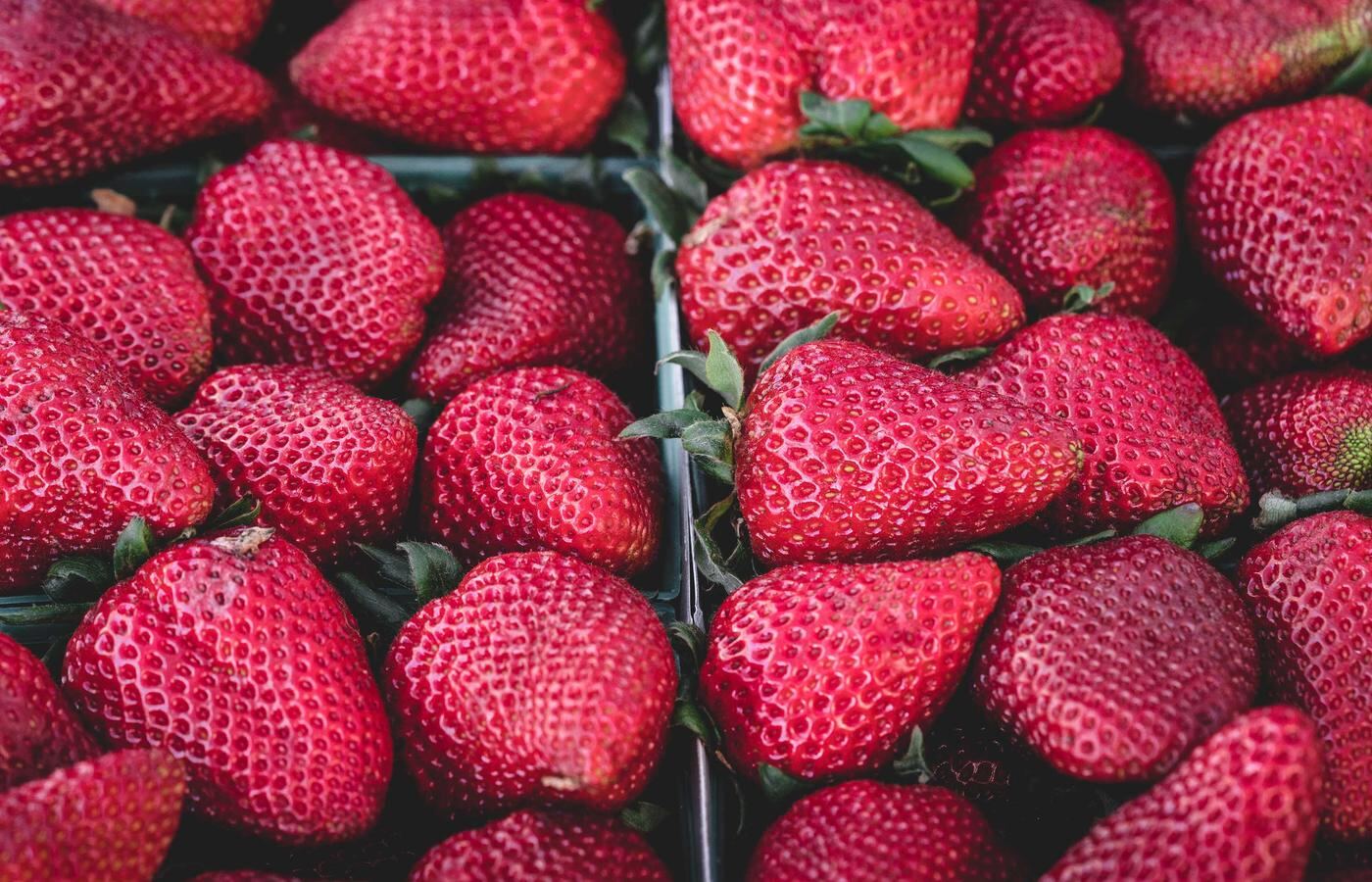
Four dietary levers that matter — and a cupboard full that probably do not.
The Longevity Kitchen
The Aisle Is an Act
Walk into any supplement store and look at what you’re actually being sold. Silver foil. Blends the label calls “proprietary,” which means they won’t tell you how much of anything is inside. A powder whose marketing implies it was harvested under a particular phase of the moon.
It’s a good show. It’s also a $228 billion one, which buys a lot of production value.
Here’s the part the production value is designed to keep you from noticing: almost none of it will change how long you live.
Four things will. They’re already in most kitchens. They cost almost nothing, photograph terribly, and nobody has built a glossy tub around them — which is exactly why you’ve never heard them laid out plainly.
That’s most of the kitchen. Everything after it is seasoning.
(One ground rule before we cook: Peakspan is vegetarian by default. Where a non-vegetarian option genuinely earns its place, we label it, so you always know what you’re looking at.)
First, Protect the Muscle
Start with the tissue nobody thinks to defend until it’s leaving.
Muscle isn’t decoration. It’s the thing that gets you up off the floor, carries the bags through the airport, steadies you on the ice, and — quietly, unglamorously — pulls glucose out of your blood and props up your bones. Lose enough of it and “independent” becomes a word other people use about you in the past tense.
You are not trying to build a physique. You’re trying to keep enough strength that an ordinary Tuesday stays ordinary at seventy, and eighty, and past that.
Protein is the raw material. Most adults past forty do better with more than the bare-minimum RDA — how much more depends on your age, size, activity, kidney function, and what the rest of your plate looks like. 2
But raw material sits there until something asks for it. Lift something heavy a couple of times a week and the protein has a reason to become muscle. Skip that, and it becomes calories. We walk through exactly how in Protein, Muscle, and the Long Game After 40.
Then, Feed the Thing That Isn’t You
Most people picture food as fuel for one organism: them.
There’s a second one. Trillions of bacteria live in your gut, and they eat what you can’t — the fiber your own body walks straight past. Beans, lentils, oats, berries, the skins and stalks of vegetables, intact grains. Feed that colony well and it pays you back in digestion, steadier blood sugar, and a metabolism that behaves.
How well does it pay? Follow enough people for enough years and the ones eating the most fiber show up with less heart disease, less type 2 diabetes, less colorectal cancer, and fewer early deaths across the board. 1 Not a supplement. A vegetable.
The target lands somewhere around 25 to 40 grams a day, depending on who you ask and how your gut currently copes. Most Americans don’t clear even the bottom of that range. 7
Two cautions, because more is not always better and faster is not always kinder. Climb toward that number gradually — a sudden jump from 10 grams to 35 invites consequences that will not improve your relationship with legumes. And if you have a GI condition or a clinician-directed diet, ask them first. Fiber is good for almost everyone. It is not equally tolerable for everyone.
The Fats You’re Actually Missing
Omega-3 is where the advice turns to fog, because three different things get crushed into one word.
There’s the fish on your plate. There’s the plant kind — ALA, from flax and walnuts and chia. And there’s the supplement kind, EPA and DHA. People say “omega-3” and mean all three at once, and that’s where it goes wrong.
They are not interchangeable. ALA is a starting material your body has to convert, and it’s bad at the conversion — often less than a tenth of it makes the trip to the forms that matter. EPA and DHA are the forms that actually show up in the research on your heart and your inflammation, and the clearest benefit lands in specific people: those who eat little to no fish, run high triglycerides, or already carry cardiovascular risk. 4
So the honest version isn’t “everyone should take fish oil.” It’s this: if you eat fish regularly, a supplement may add little. If you don’t, you may be genuinely short on something your body can’t make well — and that’s the gap worth closing, with a product that states its EPA and DHA on the label and has been tested by someone other than the company selling it. 4
For vegetarians, algae is the tidy answer. The fish never made these fats themselves — they got them from algae, up the food chain. You can just start there.
Stop Feeding the Fire Every Hour
You don’t need a flat blood-sugar line. You’re a person, not a spreadsheet, and a body that never sees a glucose rise is a body that isn’t eating.
The problem isn’t the rise. It’s the pattern — grazing on refined carbohydrates all day, so you’re never quite hungry and never quite full, riding a low chop of energy dips and cravings that you’ve come to think of as normal. It isn’t normal. It’s a pattern, and patterns can change.
The fix is almost boring: put protein and fiber in your meals, lean on carbohydrates that still resemble the plant they came from, quit turning every hour into a snack, and — the one that surprises people — walk for a few minutes after you eat. That last one isn’t folklore. A short, easy walk after a meal measurably blunts the glucose spike compared with staying in your chair. 5 6 Often it does more than swapping the food would.
You’re not chasing a flat line. You’re building a better shape to the day. If you want to see your own version of that shape, a short CGM experiment will show it to you — though for most healthy people, honestly, paying attention to how you feel an hour after eating tells you nearly everything a sensor would.
The Seven-Day Kitchen Reset
Enough theory. Before you buy a single thing, here’s a week that shows you which of the four levers actually moves the needle for you — no shopping required.
For seven days:
- Build every main meal around a clear protein source.
- Add one whole, high-fiber plant to each.
- Stop grazing between meals.
- Walk 5–10 minutes after one meal a day.
- Buy no new supplements.
- Jot down energy, hunger, digestion, and how training felt.
Then read your own week back and ask:
- What got easier?
- What actually kept you full?
- What did you miss?
- Which supplement, if any, would have solved a real problem — and which would have just decorated the counter?
This isn’t a diet. It’s a week of paying attention to what your kitchen is already doing, and what it isn’t. It also tells you exactly what — if anything — to shop for next.
When a Product May Help — After the Food Is Working
Notice the order. The action plan came before this section, on purpose.
Supplements are for filling specific, identified gaps in a kitchen that’s already working. They are spectacularly bad at rescuing one that isn’t — and remember that industry that can’t reliably put on the label what’s actually in the jar? When independent labs test supplements, roughly a quarter fail — wrong doses, contamination, or ingredients that never made the label. 10 That’s the thing you’d be asking to fix your foundation. Fix the food first.
With that said, a short list has real evidence behind it.
Some links below include negotiated reader discounts. These and other links on the site may earn the Society a commission — it never changes what you pay. How this works.
Creatine — 5 grams a day, no loading, timing irrelevant. It’s the single most-studied, best-supported performance supplement there is; the sports-nutrition body that reviews these things calls it the most effective one available. 2 The muscle and power evidence is strong. The interesting frontier is cognition — a 2018 review found early signals for memory and reasoning, strongest in people who start low on creatine, which includes most vegetarians. 3 Early, not settled. Worth knowing, not worth overselling. Synthetic, so naturally Vegan.
Omega-3 (EPA/DHA) — the gap-filler from earlier, made concrete. Useful mainly if fish and algae are missing from your week. Buy on the actual EPA/DHA numbers, not the marketing. The Momentous Vegan Omega-3 (Algae) delivers both straight from algae Vegan; if you eat fish, the Momentous Omega-3 works too Fish · not vegetarian.
Vitamin D (with K2) — the one worth a test before a purchase. Deficiency is common in anyone who doesn’t see much sun, but “common” isn’t “you,” and a 25-hydroxy vitamin D blood test replaces the guess with a number. 8 There’s a reasonable mechanistic case that D3 and K2 work better paired than alone, though it rests more on biology than on large trials — so combine them if you supplement, but don’t let anyone sell you the pairing as settled fact. 9 The Thorne Vitamin D/K2 carries both.
Electrolytes — the one everyone gets backwards. Sodium spent decades cast as the villain; the correction has now overshot into treating it as a virtue. Both are wrong, and which mistake you’re making depends on you. The narrow, real case: if you train hard, sweat heavily, and eat mostly unprocessed food, you can lose more sodium than your meals replace. In that situation, a sugar-free electrolyte mix earns its place. The LMNT Electrolytes is one clean option for deliberate replacement during or after heavy training.
But the stop sign matters more than the product. If you have high blood pressure, kidney disease, or heart failure, or you’re on a sodium-restricted diet, adding salt on your own can do real damage. And don’t reverse-engineer a deficiency from feeling tired or crampy — those have a dozen causes, most of them not sodium. If it persists, that’s a conversation with a clinician, not a scoop in your water bottle.
A kitchen built for the long game is not impressive to look at. It holds foods you can pronounce, meals you’ll actually repeat, and enough protein and plants to protect a body you’re planning to use hard for a long time.
Supplements can fill a gap. They shouldn’t become the meal, the hobby, and the personality.
Build the kitchen first. Decorate the shelf later — if there’s anything left to decorate.
The Lookout
- Protein, fiber, and meal pattern — steady, replicated evidence. The direction never wavers: real food, enough protein, favor plants, stop grazing.
- Omega-3 — useful in specific contexts (low fish intake, high triglycerides, cardiovascular risk), not a blanket instruction for healthy adults.
- Creatine — strong for muscle and power; the cognition signal is early, worth watching, not banking on.
- Vitamin D — test before you guess. The K2 pairing is plausible, not proven — reasonable to combine, wrong to market as settled.
- Sodium — a real tool for heavy sweaters, a real risk for several medical conditions, not a virtue in its own right.
Nutrition is where longevity writing most often slides quietly into supplement copy. This article draws the line at the counter: food first, supplements for named gaps, products in a section of their own — where you can see them coming.
Sources
- 1. Reynolds A, Mann J, Cummings J, et al. "Carbohydrate quality and human health: a series of systematic reviews and meta-analyses." The Lancet. 2019;393(10170):434-445. PubMed ↗
- 2. Kreider RB, Kalman DS, Antonio J, et al. "International Society of Sports Nutrition position stand: safety and efficacy of creatine supplementation." JISSN. 2017;14:18. PubMed ↗
- 3. Avgerinos KI, Spyrou N, Bougioukas KI, Kapogiannis D. "Effects of creatine supplementation on cognitive function." Exp Gerontol. 2018;108:166-173. PubMed ↗
- 4. Siscovick DS, et al. "Omega-3 PUFA supplementation and cardiovascular disease prevention: AHA science advisory." Circulation. 2017;135(15):e867-e884. AHA ↗
- 5. Buffey AJ, et al. "Acute effects of interrupting prolonged sitting with standing and light-intensity walking." Sports Med. 2022;52(8):1765-1787. PubMed ↗
- 6. Engeroff T, et al. "Postprandial glycemic response to exercise: systematic review with meta-analysis." Sports Med. 2023;53(4):849-869. PubMed ↗
- 7. U.S. Department of Agriculture. Dietary Guidelines for Americans, 2020-2025. Recommended fiber intake: 22-34 g/day depending on age and sex. USDA ↗
- 8. Forrest KYZ, Stuhldreher WL. "Prevalence and correlates of vitamin D deficiency in US adults." Nutr Res. 2011;31(1):48-54. PubMed ↗
- 9. van Ballegooijen AJ, et al. "The synergistic interplay between vitamins D and K for bone and cardiovascular health." Int J Endocrinol. 2017;2017:7454376. PubMed ↗
- 10. ConsumerLab.com and Labdoor independent supplement testing. ConsumerLab: ~20-27% of tested products fail quality standards across 6,000+ products; 32% of multivitamins failed in the March 2026 review. Labdoor (2024): 23% of 1,000+ products deviated >20% from label claims. ConsumerLab ↗